Your records · Free
Your records are yours. Get them before you need them.
Every claim, appeal and appointment runs on paper. Here is where each record lives and how to get it, without paying anyone.
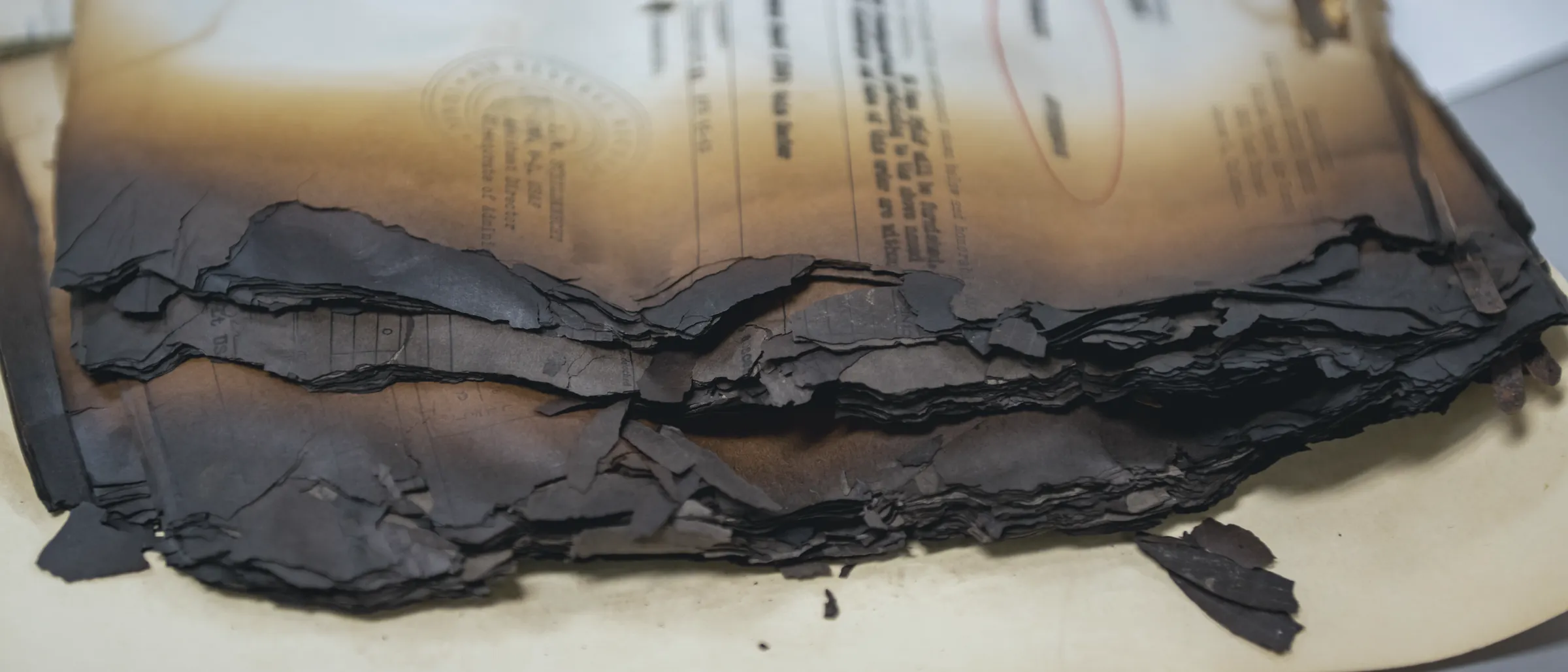
A personnel file burned in the 1973 National Personnel Records Center fire, St. Louis. Photo for the National Archives by Sean Derrick
Official military personnel files destroyed in the 1973 fire at the National Personnel Records Center in St. Louis.
What the National Archives generally charges for records of discharges less than 62 years ago.
The SF-180, the form that requests military records by mail or fax.
Source: U.S. National Archives, the 1973 fire at the National Personnel Records Center.
Where each record lives
Four places. Most requests are free.
Never pay a company to request records for you. Every source below is the official one, and most requests cost nothing.
Your DD-214, through milConnect
Many veterans who separated in recent decades can download their DD-214 from the Department of War’s milConnect site.
Open milConnect Free · National ArchivesYour full personnel file and DD-214
Request your service record from the National Archives online, or on the SF-180 form by mail or fax. For discharges less than 62 years ago it is generally free.
Request from the Archives Free · the formStandard Form 180
The one-page request form for military records, including service treatment records held by the Archives.
Get the SF-180 Free · VA.govYour VA medical records
Download your VA health records yourself, or request a full copy from VA.
Get them on VA.govA claim is only as strong as the paper behind it. Ask for yours now, while there is time.
Records most veterans never ask for
Your exposure record, and your blood.
Your exposure record (ILER)
The Individual Longitudinal Exposure Record links where you were stationed to known exposures there. VA clinicians and accredited representatives can look it up. Ask yours to pull it before you file.
The blood they already hold
The military keeps serum left over from required blood draws, starting at enlistment, in the DoD Serum Repository. Our Veterans’ Own Blood Act would make access to your own specimens a right.
Read the bill →If your file burned in 1973
The fire destroyed an estimated 80% of Army records for discharges from 1912 to 1960, and 75% of Air Force records for discharges from 1947 to 1964. The Archives can rebuild what it can from other sources. Send copies of anything you kept.
Put it all in one place
Connecting the Dots keeps your service, conditions and places together and builds a cited packet for your representative.
Open Connecting the Dots →Keep going
In crisis, or worried about someone? Call 988 and press 1, or text 838255. Free, confidential, 24/7. For family members too.